

‘It happens here too’: Gaps in housing support for domestic violence survivors in Los Alamos
The current state of domestic violence housing resources for our community, and where a local shelter might fit in.

Content warning: This article contains general, non-graphic discussions of domestic violence and homelessness. Support is available; please consult the list of resources at the bottom of this story.
Photographs by Eliana Padilla and Minesh Bacrania
When I met with Father Theophan Mackey to discuss the nonprofit he started in 2020, called Macrina’s House, he shared a story with me. The year earlier, a community member — who he had been communicating with regularly throughout their struggle with domestic violence — had gone missing for a night.

The community member was later found and did eventually make it out of the abusive situation they’d been in, but it made Mackey aware of the need for a dedicated, local place where he could refer people during emergencies and know there was help there all the time. The following year, he established his nonprofit with the goal of opening a women’s domestic violence shelter in Los Alamos.
Mackey is the priest at Saint Job of Pochaiv Orthodox Church, and as a community leader, is approached for various reasons. “Everyone in town knows who the guy in the black dress is,” he said, gesturing at his black cassock. “I am visible in the community, and I decided after that night that I needed someplace to send people who needed to get out of a bad situation.”
As of early August this year, the Los Alamos Police Department had received twenty six calls for domestic violence-related incidents in Los Alamos and White Rock; in 2025 there were thirty five calls throughout the year. Reported incidents include assault, battery, and property damage; however, domestic violence is underreported nationwide, and police call statistics do not capture the additional incidents that are never called in. They also do not necessarily reflect the full extent of less visible forms of domestic violence, such as emotional or financial abuse, which can either accompany these more obvious forms or occur on their own.
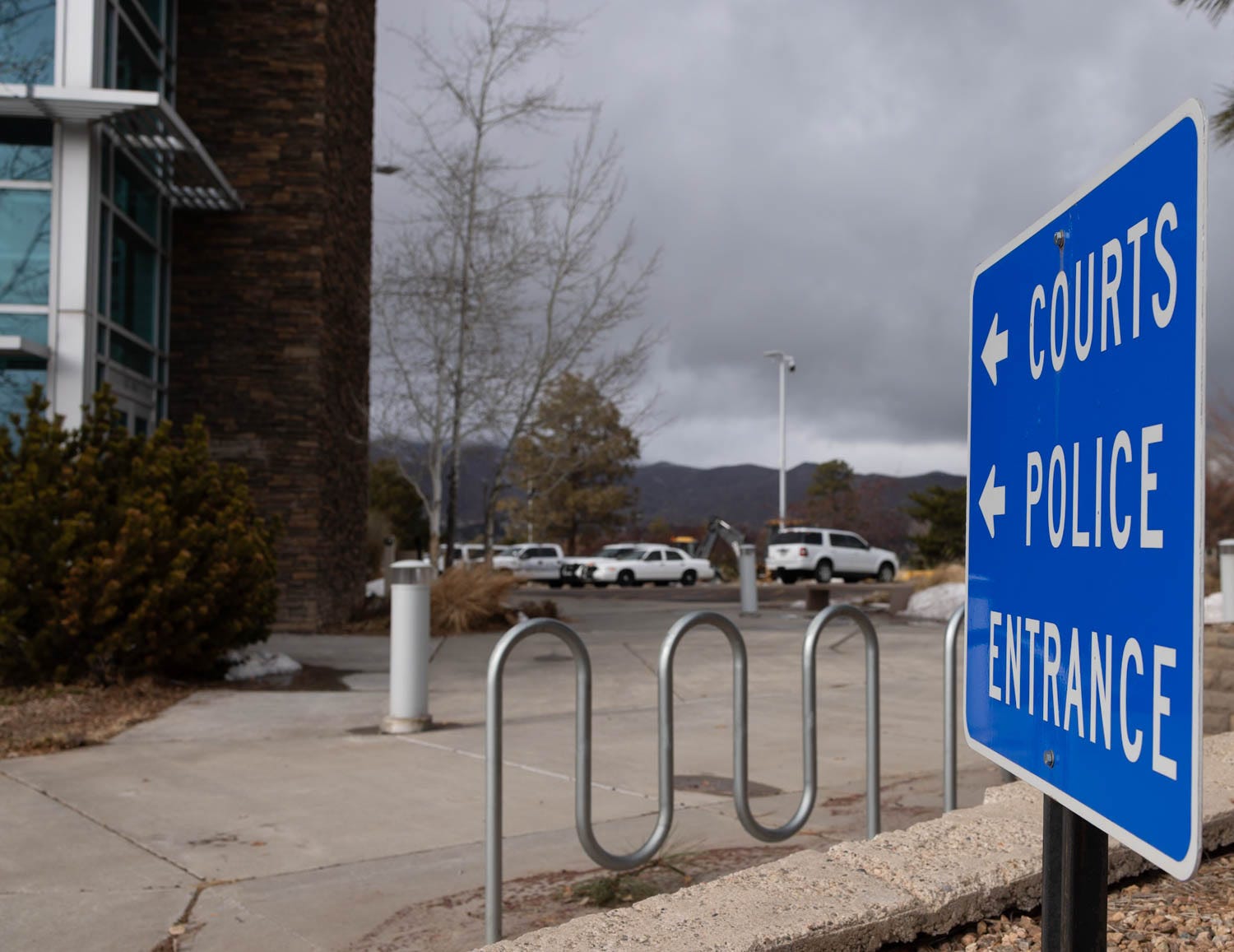
With no dedicated emergency shelter for domestic violence survivors in Los Alamos County, the nearest options are the Crisis Center of Northern New Mexico in Española and Esperanza Shelter in Santa Fe.
Mackey hopes that a shelter operated by Macrina’s House could provide local, short-term support for survivors of domestic violence. This could mean a safe place for someone to spend the night away from their abuser if they haven’t yet made the decision to leave the relationship, or a bed for a couple of nights while they wait to sort out the logistics of moving in with a friend or family member in another city, he said.
Short-term support without a shelter
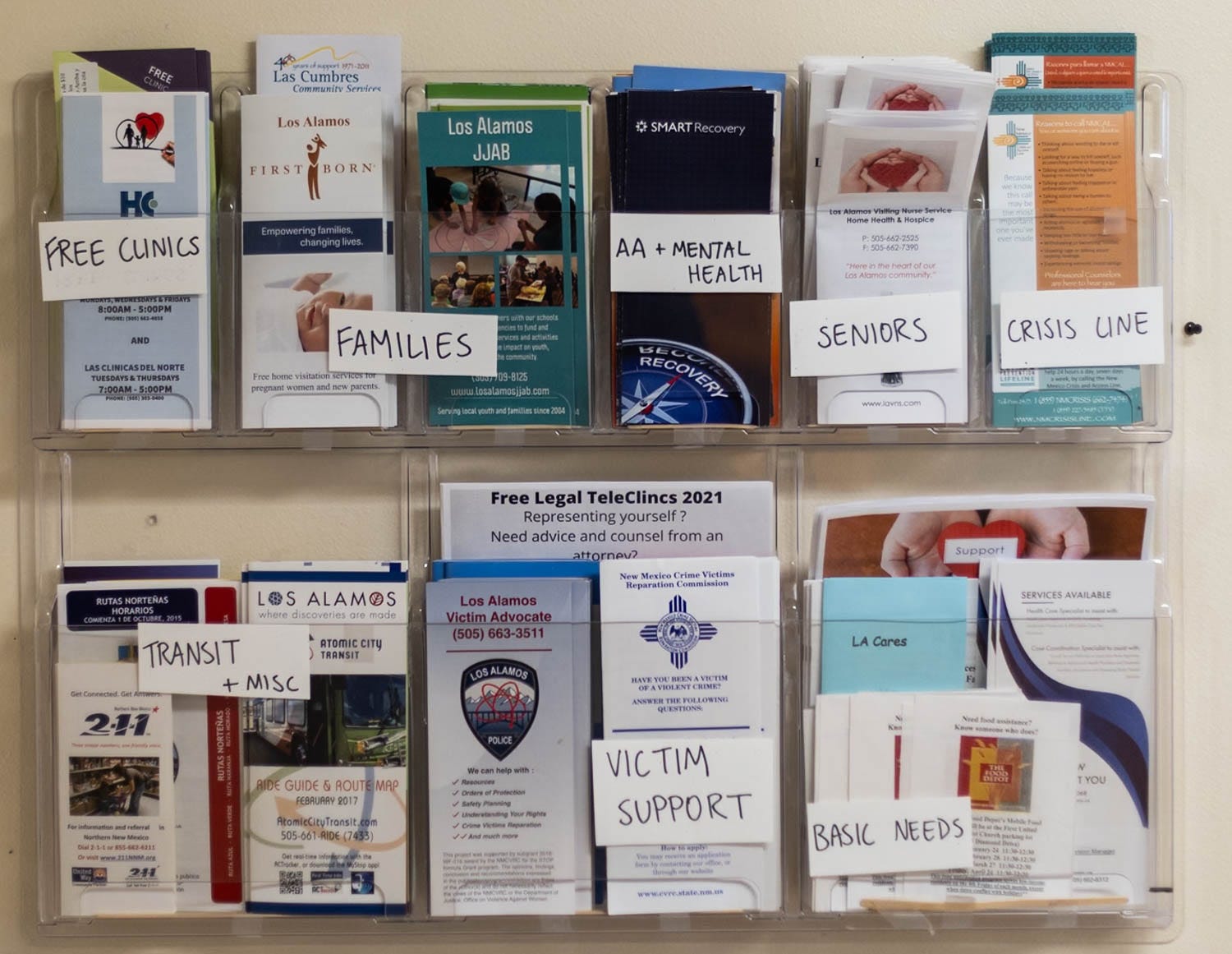
When I spoke with the Los Alamos County victim assistant, who has requested to remain anonymous for her safety, she explained that the absence of a dedicated shelter in Los Alamos doesn’t mean there’s absolutely nowhere for victims of domestic violence to go. The local nonprofit Self Help manages an emergency fund that the victim assistant uses to arrange temporary shelter for victims when they need it.
These temporary arrangements are made within Los Alamos County, but are not associated with any official, dedicated shelter. (For safety reasons, further details have not been included.) The emergency fund can be used, for instance, if police officers receive a call for a domestic violence-related incident in the middle of the night and need to find immediate shelter for a victim who might be in danger if they remained in their current home.
The victim assistant laid out a common situation requiring this type of shelter: a domestic violence incident prompts a victim to call the police or approach the victim assistant for support, and the victim files for an order of protection. The victim is then provided with a temporary place to stay while waiting for the order of protection to be granted — a process the victim assistant said is typically completed within forty eight hours of filing. Once granted, the order enables the district judge to evict the offender from a shared household, and the victim can return to it.
Another situation requiring this type of short-term support could be if an abuser is issued a court summons, in which case the victim may not be safe in their home during the lead-up to a hearing. This period before a hearing is normally two weeks and still considered short term, said the victim assistant.
In New Mexico, victims who report domestic violence to law enforcement are considered victims of an enumerated crime, which qualifies them to receive victim’s funds from the Crime Victims Reparations Committee. When a victim is eligible, CVRC funds can provide an additional safety net for temporary shelter in town.
But it isn’t very often that the victim assistant needs to find this type of temporary shelter for victims in the first place. As of July this year, she had worked with two people who needed it, and neither of them had to be away from their home for more than several nights.
For survivors requiring longer-term shelter past what the funds and accommodations in town can cover — for instance, someone who does not want to file for an order of protection but has a divorce pending and can no longer remain in a household with their partner — the only option is a shelter in another city. But this too is infrequent. When asked how often she deals with clients in this position, the victim assistant said, “I’ve only faced that challenge very minimally. I try my hardest to keep a victim in their home without displacing them.”
Barriers to permanent housing
Los Alamos County Social Services sees a slightly different clientele. “If a person comes in seeking our services for a domestic-violence related issue, they are almost always looking for housing,” said Jessica Strong, the social services manager.
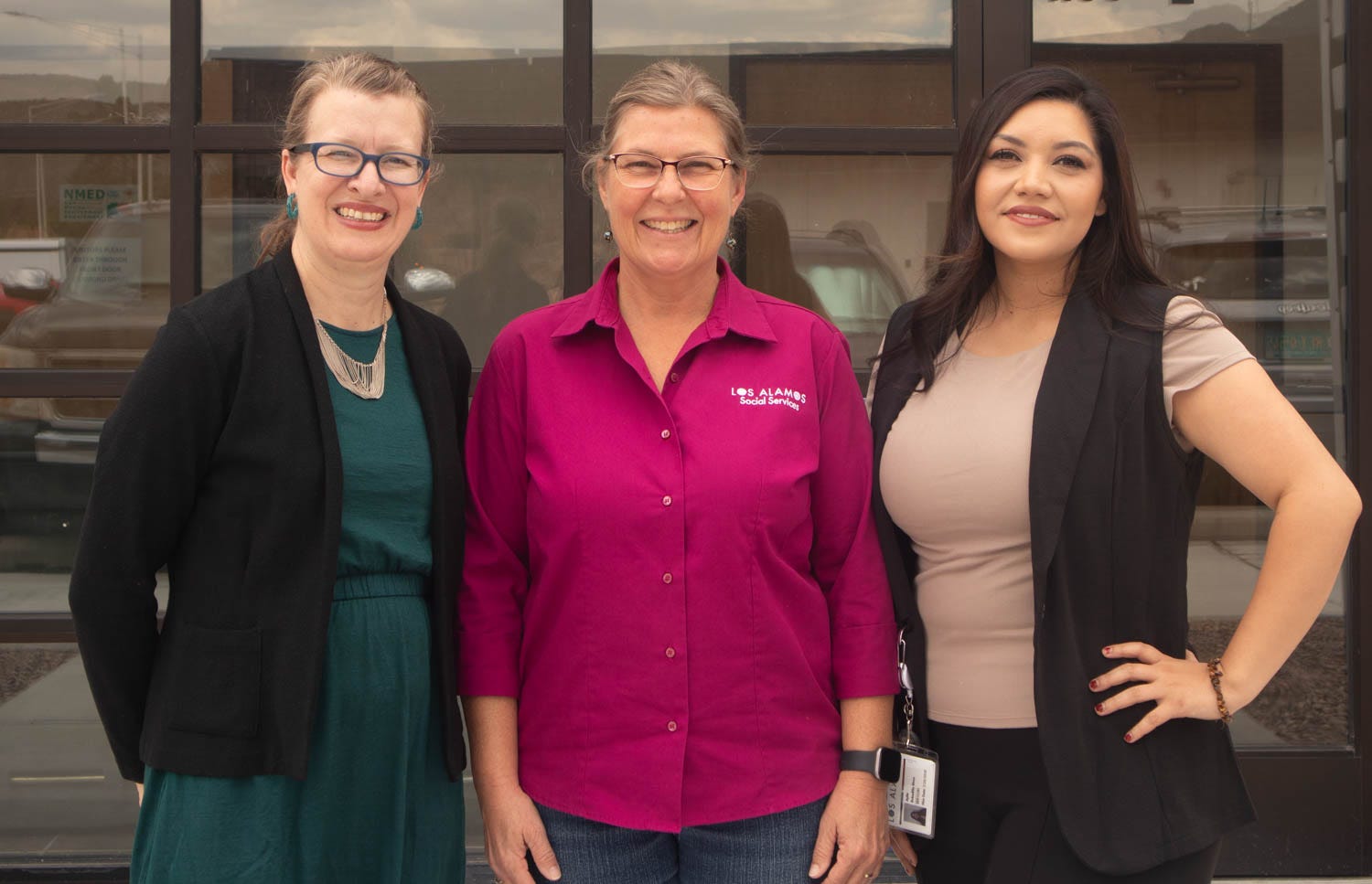
Survivors who do not want to file charges against their abuser may not be able to return to their original household, as it isn’t always possible to evict the abuser when this is the case. However, even if legal protections do allow a survivor to return to their household safely, they may not be able to afford to remain there. Strong has worked with victims of financial abuse, for instance, whose partner cut off their access to bank accounts, vehicles, cellphones, credit cards, or health insurance when the victim asked for a divorce or separation.
Even for a survivor of domestic violence who does still have an income and financial independence, finding an affordable place to live in Los Alamos is hard. “In many cases, there’s still going to be a reduction of income once that person is living on their own,” Strong explained, “and the median rent in town is very high.”
If someone is looking for a second job to help pay their rent and bills, there aren’t many available. Unlike other, larger cities, the retail and restaurant sectors in town are very limited, and few jobs offer night shifts. This can be further complicated by trouble finding childcare during shifts or sorting out transportation to work. Of course, all these barriers are multiplied when financial abuse is involved and the survivor has no existing income and no financial independence.
Since the beginning of 2025, changes in the availability of a form of federal rental assistance called the Section 8 Housing Choice Voucher Program have also made it more challenging to secure affordable, permanent housing in and around Los Alamos. The voucher program, also known simply as Section 8, covers a portion of rent for low-income families and individuals to make housing more affordable.
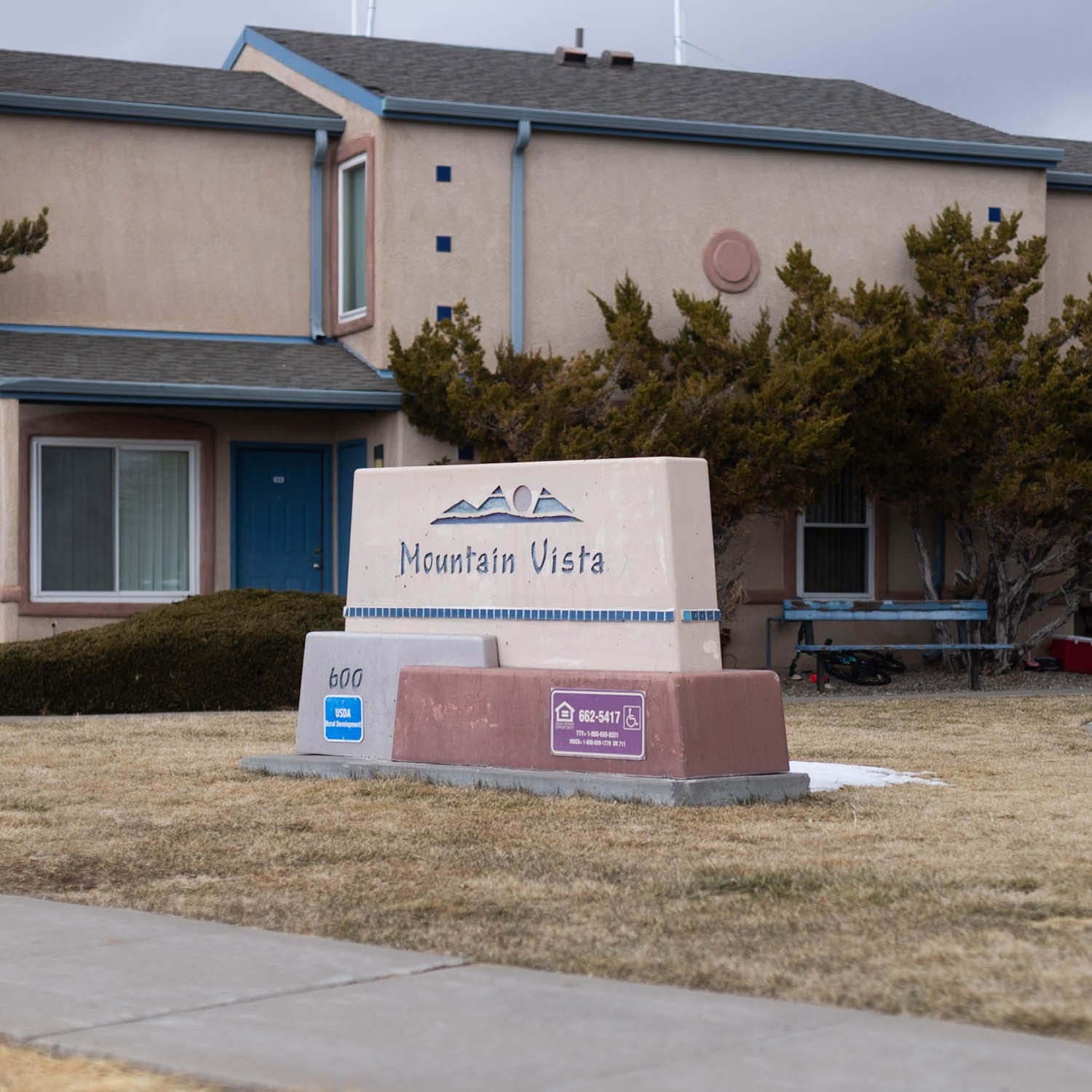
Previously, Los Alamos residents could apply for Section 8 through the Santa Fe Civic Housing Authority. They could also meet in-person with a member of SFCHA’s Española office, who made monthly visits to Los Alamos to help with applications. But these visits stopped in February of 2025, and later that year in September, SFCHA closed its Section 8 waitlist to all new applications.
Section 8 waitlists in other nearby counties including Bernalillo, Rio Arriba, and Taos are also currently unavailable after closing that year. In Santa Fe, this closure was attributed in part to funding cuts to the Department of Housing and Urban Development under the second Trump administration.
That’s not to say it was easy for survivors to get into permanent housing when these waitlists were still open — applicants could sometimes wait up to two or more years to receive their voucher, and once they received it, few landlords would accept them. In 2024, for instance, the victim assistant told Boomtown for another story that only two apartment complexes in Los Alamos accepted Section 8; a case worker at social services, Aylin Bobadilla, said that before coming to Los Alamos, she worked with clients in Española who became homeless because so few landlords accepted them. Another case worker I spoke to, Deni Fell, encountered landlords in Bernalillo who refused to rent to her clients as soon as Section 8 was mentioned. Fell added that there is currently no statewide law in New Mexico banning this type of source-of-income discrimination.
Now, they all agreed, closed waitlists have made what was already difficult next to impossible. “One of the tools we had to help people get into permanent housing has completely gone away,” said Strong. “It’s been really hard, having to tell people that.”
Because it can take months or even years to get into permanent housing after leaving an abusive relationship, domestic violence survivors sometimes have no choice but to stay in a shelter while they wait to secure an apartment, Fell and Strong both explained. Their clients who end up in domestic violence shelters elsewhere in the region are typically those in this situation.
How a local shelter might help
Everyone interviewed for this story shared concerns over survivors having to leave town to stay in a domestic violence shelter, whether for short- or long-term periods. It can be socially and emotionally difficult for anyone to leave their community when they have no choice but to seek resources elsewhere, and this is especially hard for someone with a job in town or kids at schools in the district.
For community health workers like Susan Williams, who is on the board of Macrina’s House, it’s also much harder to support clients who leave town to stay in a shelter. Among other things, Williams offers home visits and parenting resources through First Born Los Alamos. She has worked with survivors of domestic violence to provide parenting support in the aftermath of abusive situations. But, if a client leaves town, she can’t always continue to work with them.
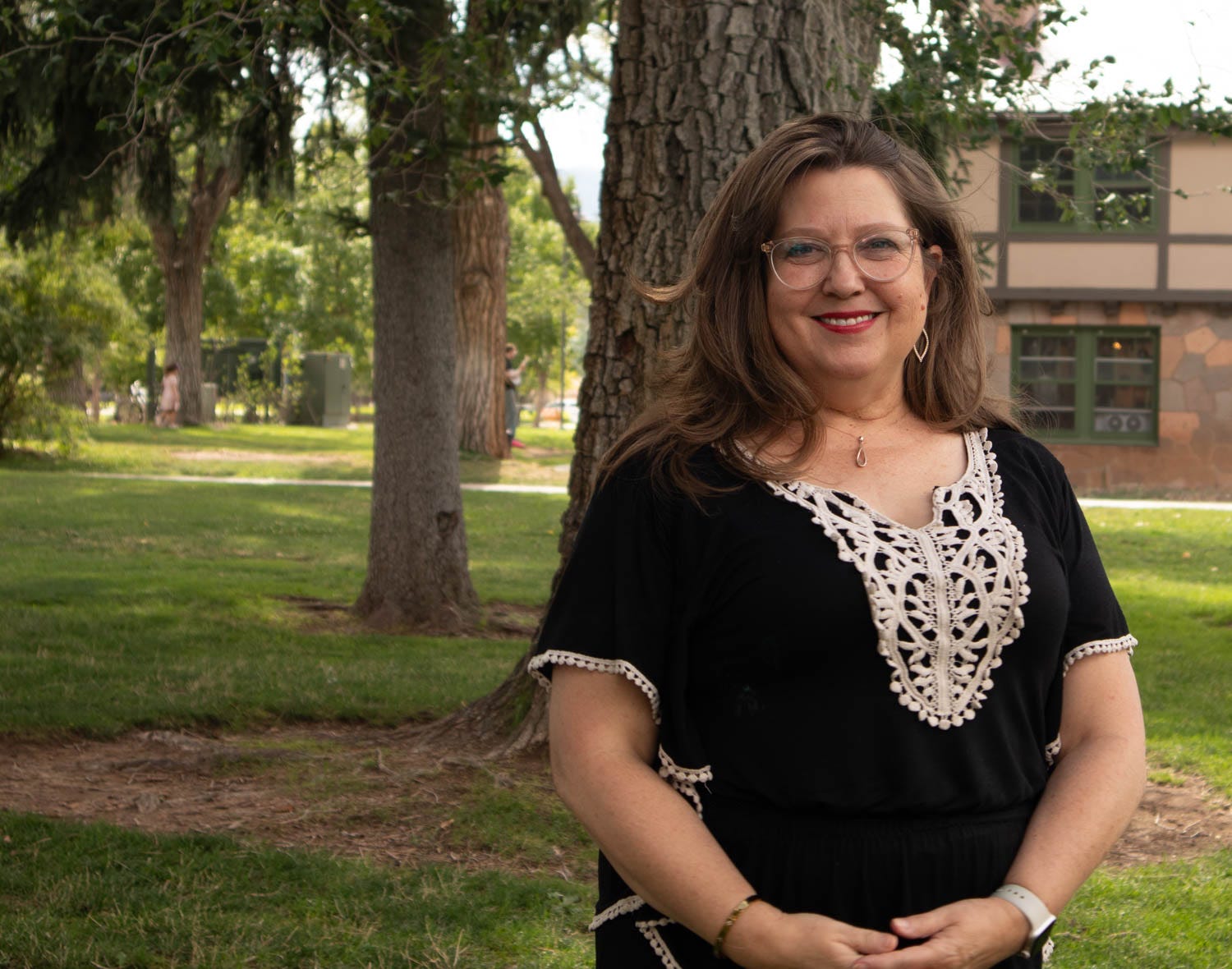
“With a lot of local organizations like First Born that educate and support families, when someone leaves Los Alamos to go to a shelter outside of the county, they lose all our services,” she said. “That can be really hard, because now you’ve lost that little bit of community you have with the people at those services who you trusted.”
However, at least in its early stages as a shelter for short-term support, Macrina’s House may not be able to keep survivors from leaving Los Alamos, as the ones who do are most often seeking longer-term shelter. Mackey mentioned that Los Alamos’s broader issues with housing frequently come up in his nonprofit’s meetings with the county, but he also knows that Macrina’s House will have to start small. “This little nonprofit is not going to fix the housing problem in Los Alamos,” he said. “But if we could get this going as a proof of concept, I do think other things will become possible.”
Even if the need for long-term shelter drives more survivors out of Los Alamos than the need for short-term shelter does, that doesn’t mean a local shelter couldn’t still improve the quality and reliability of the short-term support that is currently available.
Mackey and Williams hope that, eventually, a shelter operated by Macrina’s House could have community members on hand to help with additional small services, such as transportation off the hill for a court date. While other nonprofits in town can provide survivors with money for gas, bus tickets, or car repairs, they can’t always drive people for liability reasons. In a town like Los Alamos that many families move to from across or out of the country, not everyone has close family or friends who they can lean on for this type of support.
A dedicated shelter that is ready and available all the time could also ensure that, were there ever a case when the local emergency fund couldn’t cover a short-term stay, there would still be a place to go. While the amount of money actually spent on temporary shelter for victims of domestic violence is small, the fund managed by Self Help is not set up exclusively to cover this — it’s also used to help people in other situations pay for urgent necessities like groceries or gas. “If we weren’t having to rely on those emergency funds for temporary shelter every time it happens, that would be awesome,” said the victim assistant.
However, the victim assistant also worries that the low number of people seeking short-term shelter in the first place would make it difficult for a shelter in Los Alamos to stay open. She added that, while she feels her clients would go to a local shelter for a short-term stay if there was no other option, many of the survivors she works with do not want to spend time in a domestic violence shelter, regardless of where it is.
“I don’t know, out of my six years of working here, if many of my clients would have wanted to go into a shelter,” she said. “Even if we had one up here, the reasons I always hear are, ‘I don’t want to go live with other women, I don’t want my kids to be living in that environment.’”
In a small town, she explained, a survivor’s fear of running into someone they know can make the prospect even less appealing. Several years ago, the victim assistant tried to start a support group for domestic violence survivors in town, which never took off for the same reason. “Everybody knows everybody here,” she said. “They didn’t feel comfortable being around each other.”
As a women’s shelter, Macrina’s House also may not be able to support male survivors of domestic violence in the community. Although women are disproportionately impacted by domestic violence, a report released earlier this year by the Centers for Disease Control and Prevention found that more than one in six men experience a form of intimate partner violence in their lifetime. Men are less likely to report or seek help for abuse than women are, due to a number of barriers.
While there are legitimate safety and wellbeing concerns that can make it complicated for shelters to admit male survivors alongside females, a shelter’s apparent or actual focus on female survivors can further discourage men from seeking shelter when they need it. “I do have a handful of male clients I work with,” said the victim assistant, “and a women’s shelter here might not be an option for them.”
The victim assistant and the workers from social services all said that a local shelter’s ability to address the needs they have seen in the community would depend on a variety of factors — most of which, at the moment, are still speculative.
Support from the community
On top of these logistical concerns, Macrina’s House has not yet been able to open a shelter due to the ongoing challenge of finding a suitable and affordable property in Los Alamos. The nonprofit has, however, been able to offer its support to survivors in other ways. For example, because social services can’t provide direct financial assistance to clients, their case workers often collaborate with local nonprofits, such as LACares and Self Help, that can help pay expenses such as utility bills, groceries, or car repairs. Macrina’s House is now a part of this scene and has covered security deposits to help domestic violence survivors secure new apartments.
With or without a shelter, other, simpler types of support can still be given from the community. For Williams, one of the most important things anyone can do is recognize all the areas of someone’s life that can be affected by domestic violence. “Small community gestures can go a long way,” she said. “Saying, ‘Hey, let me help you with meal planning, let me drive you to the grocery store or to Santa Fe for your court date.’ I’d like to see more of that, just people willing to volunteer their time or a little bit of love.”
Williams’ understanding that these small things do add up brought to my mind the analogy Strong used to describe many survivors’ precarious situations. “I tell people it’s like trying to solve a Rubik’s cube,” she said. “There are always multiple sides, and it’s hard to get them all at once.”
In the scenario she described, someone may have a lead on an apartment — the red side of the Rubik’s cube — but to get it, they have to pay a security deposit, and they don’t have an ID to fill out the paperwork because their abuser has taken it from them. Now, they need to get their ID reissued — the yellow side. This can take months, so they have to go stay at the Crisis Center in Española while they wait, but they can’t get a ride there for another week — the green side. By the time their ID is reissued, they find out the landlord has already given the apartment to someone else, so their red side is messed up again. Small favors can make a huge difference for someone navigating through all this.
“Even though some people up here are relatively privileged, domestic violence and housing insecurities are everywhere,” said Williams. “It happens here too, and these things do need to be recognized by everyone in our community.”
Looking for help? Here are some places to turn:
Crisis lines:
New Mexico Crisis and Access Line: 1 (855) 662-7474, or call/text 988
National Domestic Violence Hotline: 1 (800) 799-7233
Local resources:
Los Alamos Victim Assistance Program: 1 (505) 663-3511
Los Alamos County Social Services: 1 (505) 662-8068
Regional shelters:
Crisis Center of Northern New Mexico (Española): 1 (505) 753-1656
Esperanza Shelter (Santa Fe): 1 (505) 474-5536